Why Sewer Line Problems Sneak Up on Homeowners
Your sewer line is buried underground, out of sight and out of mind — until something goes very wrong. Many homeowners in Oakdale, Carnegie, and the greater Pittsburgh area live with aging clay or cast iron sewer lines that are slowly deteriorating beneath their yards. By the time obvious symptoms appear, the damage is often significant.
Catching a failing sewer line early can mean the difference between a manageable spot repair and a full-yard excavation. Here are the five warning signs every Western PA homeowner should know.
1. Recurring Drain Backups
An occasional clogged drain is normal. But if your toilets, showers, or basement floor drains are backing up repeatedly — especially after you have already had them snaked — the problem is likely deeper than a simple clog. Tree roots, pipe collapses, and bellied sections in the main sewer line create persistent blockages that no amount of snaking will permanently fix.
Pay special attention to backups that affect multiple fixtures at the same time. When flushing a toilet causes water to gurgle up in the shower, that is a strong indicator of a main line issue rather than a branch line clog.
2. Foul Odors in Your Yard or Basement
A properly functioning sewer line is completely sealed. You should never smell sewage inside your home or in your yard. If you notice a persistent rotten egg or sewage odor near floor drains, cleanout caps, or in specific areas of your yard, raw sewage may be leaking from a crack or joint separation in the pipe.
In Pittsburgh's climate, these odors can intensify during warm, humid months. Do not assume the smell will go away on its own — leaking sewage contaminates soil and groundwater and poses a health hazard to your family.
3. Unusually Green or Soggy Patches in Your Lawn
Is one section of your yard suspiciously greener and lusher than the rest? Leaking sewage acts as a fertilizer, feeding the grass directly above the break. You may also notice soggy, spongy areas that never seem to dry out, even during dry spells.
In severe cases, the ground above a broken sewer line can develop sinkholes or depressions as soil is washed away by the leak. If you notice the ground sinking along the path between your home and the street, call a plumber for a camera inspection immediately.

4. Slow Drains Throughout the House
When a single drain is slow, it is usually a localized clog. When every drain in the house is sluggish — sinks, showers, tubs, and toilets — the main sewer line is the likely culprit. Root intrusion gradually reduces the pipe diameter, and accumulated grease and scale compound the restriction over time.
Many homeowners in older Pittsburgh neighborhoods try chemical drain cleaners or over-the-counter root killers. While these may provide temporary relief, they do not address the underlying pipe damage and can actually accelerate deterioration of aging clay pipes.
5. Pest Problems Near Sewer Lines
Rats, mice, and insects are attracted to broken sewer lines. A crack as small as a quarter provides enough entry for rodents to access your plumbing system and potentially your home. If you are experiencing unusual pest activity in your basement or near outdoor cleanouts, a sewer line break could be the entry point.
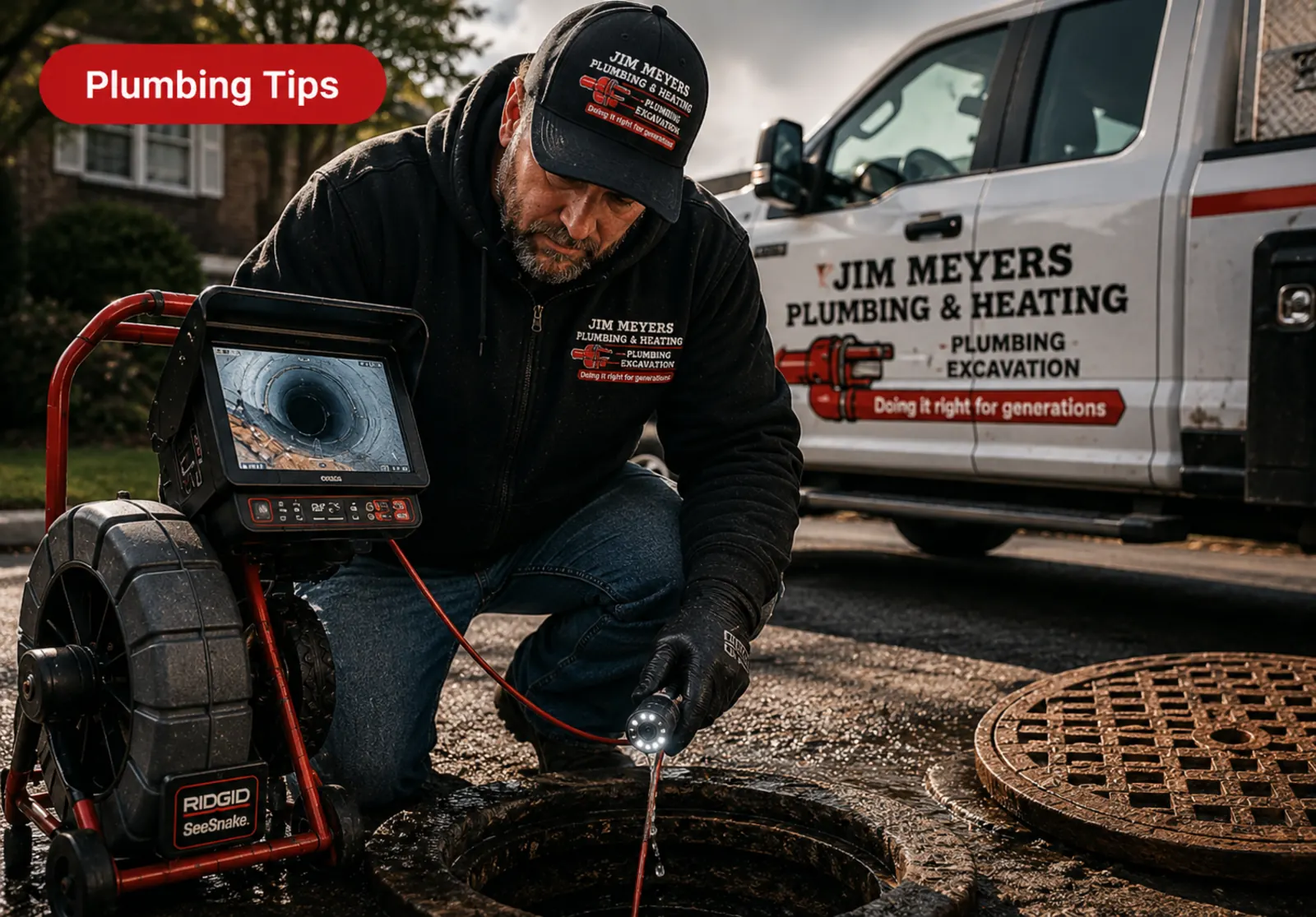
If you recognize one or more of these signs, do not wait. Jim Meyers Plumbing offers camera line inspections that give you a clear, real-time video of the inside of your sewer line. We serve Oakdale, Bridgeville, Robinson Township, Moon, and the entire Pittsburgh area. Call us at (412) 787-7805 to schedule an inspection before a minor issue becomes a major problem.