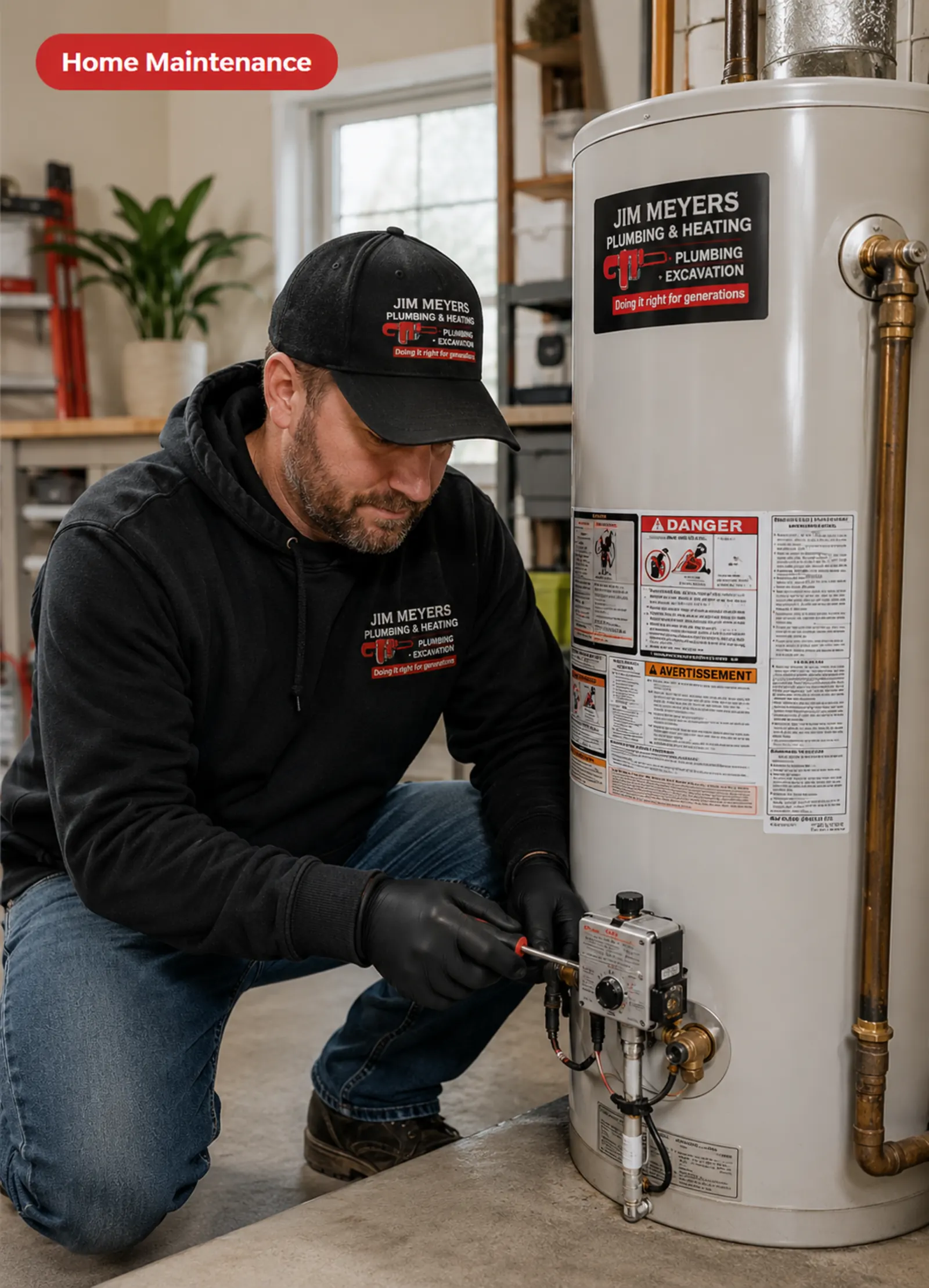
Your Water Heater Needs Attention Too
Most homeowners do not think about their water heater until it stops producing hot water — or worse, starts leaking across the basement floor. A standard tank water heater has a life expectancy of 8 to 12 years, but with proper annual maintenance, many units in the Pittsburgh area last well beyond that range.
Whether you have a traditional tank or a modern tankless system, a little preventive care goes a long way toward keeping your hot water flowing and your energy bills in check.
Flush the Tank Annually
Western Pennsylvania has moderately hard water, which means mineral sediment builds up on the bottom of your tank over time. This layer of calcium and lime acts as an insulator between the burner and the water, forcing the unit to work harder and longer to heat the same volume of water.
Flushing the tank once a year removes this sediment. The process involves connecting a garden hose to the drain valve at the bottom of the tank and running water through until it comes out clear. If you are not comfortable doing this yourself, Jim Meyers Plumbing offers affordable maintenance visits that include a full flush and system inspection.

Check the Anode Rod
The anode rod is a sacrificial metal rod inside your tank that attracts corrosive elements in the water, protecting the tank lining from rust. Over time, the rod corrodes away. Once it is fully consumed, the corrosive elements attack the tank itself, leading to leaks that cannot be repaired.
Anode rods should be inspected every two to three years and replaced when they are more than 50 percent corroded. This inexpensive part — typically under $50 — can add years to your water heater's life. It is the single most cost-effective maintenance step you can take.
Test the Pressure Relief Valve
The temperature and pressure (T&P) relief valve is a critical safety device. If pressure builds too high inside the tank, this valve opens to release water and prevent a dangerous situation. Testing it once a year takes only a few seconds: lift the lever partway, let some water discharge, and release. The valve should snap shut cleanly.
If the valve drips continuously after testing, or if it will not open at all, it needs replacement. Do not ignore a malfunctioning T&P valve — it is there to prevent your water heater from becoming a safety hazard.
Adjust the Temperature Setting
Many water heaters are set to 140°F at the factory, but the Department of Energy recommends 120°F for most households. Reducing the temperature by 20 degrees cuts your water heating energy costs by 6 to 10 percent and reduces the risk of scalding, which is especially important in homes with young children or elderly family members.
If you are unsure about the current setting on your unit, or if you need help with any of these maintenance tasks, call Jim Meyers Plumbing at (412) 787-7805. We serve homeowners in Oakdale, Moon Township, North Fayette, and throughout the Pittsburgh area.