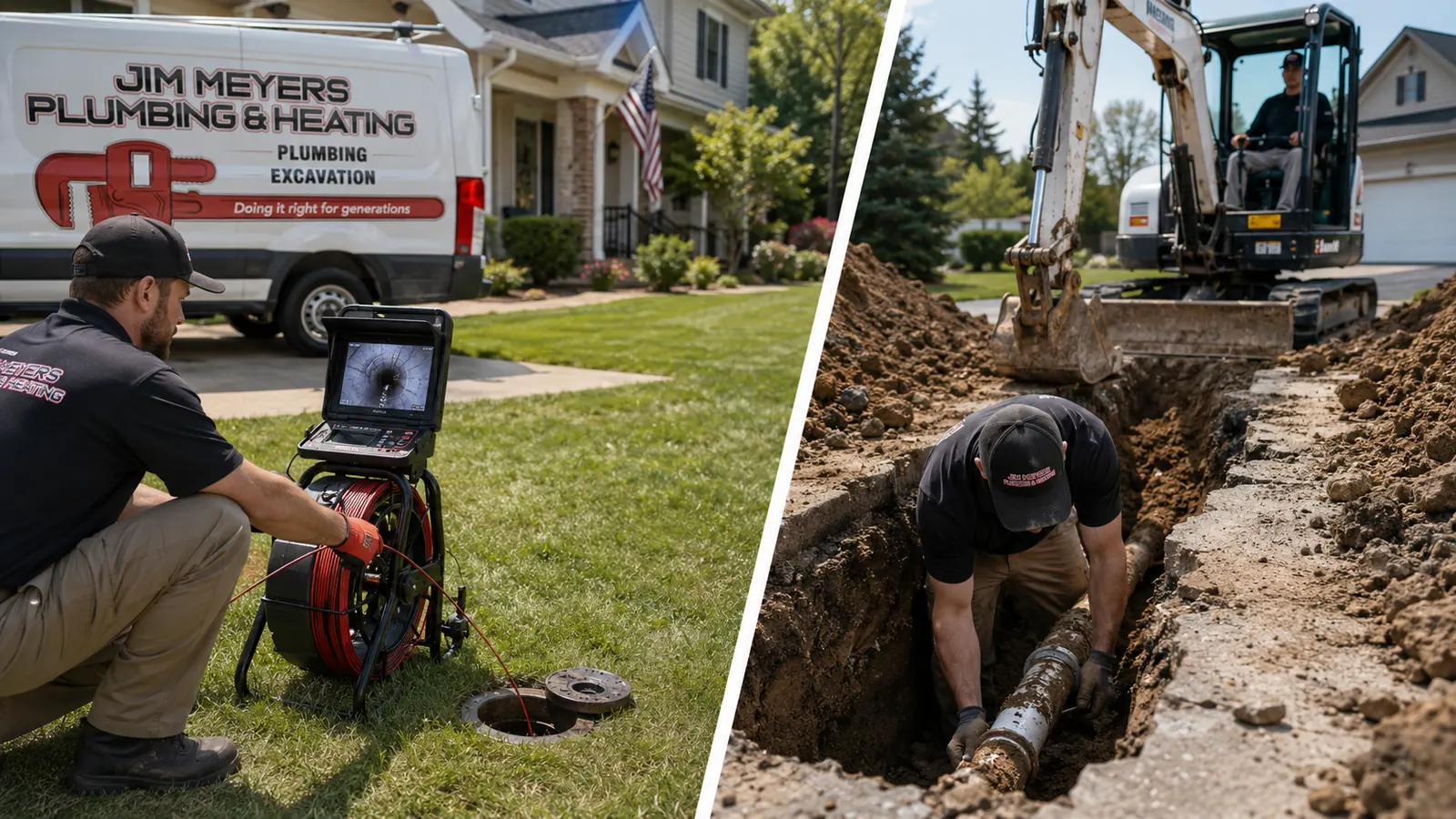
Two Approaches to the Same Problem
When your underground sewer or water line fails, you have two repair options: dig it up the traditional way, or fix it from the inside using trenchless technology. Jim Meyers Plumbing offers both methods because neither is universally superior. The right choice depends on your pipe's condition, your property layout, and your budget.
As a company that has been doing both traditional excavation and trenchless repairs in the Pittsburgh area for over 45 years, we are uniquely qualified to give you an unbiased recommendation. Here is an honest comparison.
What Is Trenchless Sewer Lining?
Trenchless sewer lining (also called CIPP — cured-in-place pipe) repairs a damaged sewer line from the inside out, without digging a full trench. A resin-saturated flexible liner is inserted into the existing pipe, inflated against the pipe walls, and cured in place to form a new, seamless pipe within the old one. Jim Meyers Plumbing installs the Blue-Light LED CIPP system — the only sewer lining method approved by Allegheny County.
The process requires only one or two small access pits rather than a full trench, preserving your landscaping, driveway, and hardscaping. Note that CIPP lining is for sewer lines only — water service lines are replaced via traditional excavation.
Advantages of Trenchless Lining
The biggest advantage is minimal property disruption. No torn-up lawns, no destroyed driveways, no damaged garden beds. For properties with mature landscaping, concrete driveways, or structures built over the sewer route, lining can save thousands in restoration costs.
Lining is also faster. Most residential sewer-lining jobs are completed in one day, compared to two to five days for traditional excavation. The new liner is seamless and jointless, which means it resists root intrusion and has an expected lifespan of 50 or more years.

When Traditional Excavation Is Better
Lining has limitations. If the existing sewer pipe has completely collapsed, there is no interior channel for the liner to follow. Pipes with severe bellying (sagging sections that pool water) usually need excavation to correct the slope. If the pipe's diameter needs to be increased, excavation is the only option. Water service lines are always replaced via excavation — they are not candidates for CIPP lining.
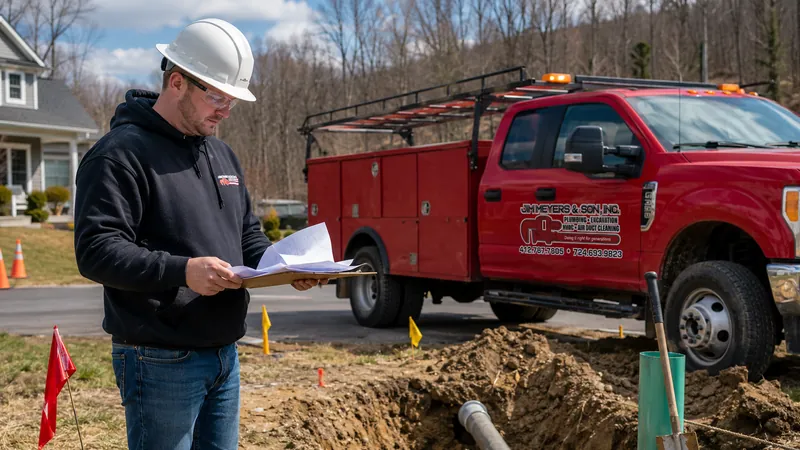
Traditional excavation also makes sense when the pipe is shallow and in an open area with minimal landscaping to protect, when multiple utility connections need to be reworked at the same time, or when the overall cost difference is minimal due to easy access.
Cost Comparison
Sewer lining typically costs between 10 and 30 percent more than traditional excavation for the pipe work alone. However, when you factor in the cost of restoring landscaping, driveways, sidewalks, and other surface features, lining often ends up being equal or less expensive overall.
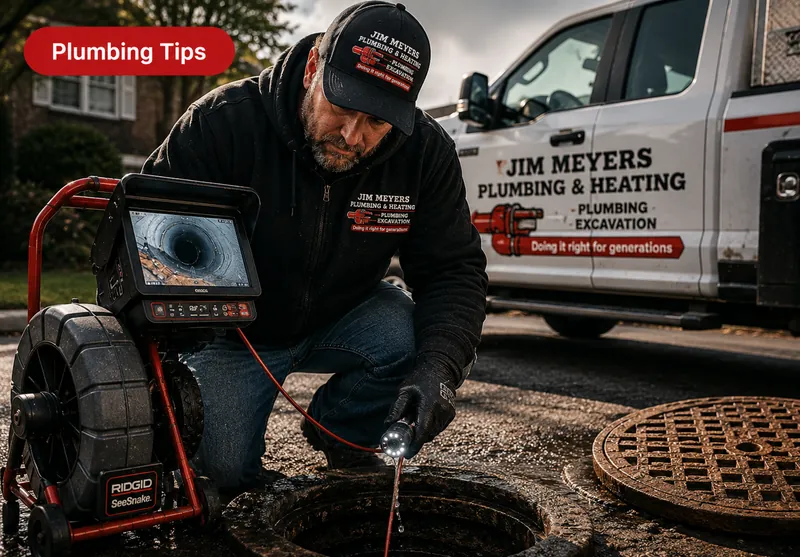
At Jim Meyers Plumbing, we always start with a camera inspection to assess your sewer line's condition. Based on what we find, we will present both options with transparent pricing so you can make an informed decision. We never push one method over the other — we recommend what is genuinely best for your specific situation. Call (412) 787-7805 to schedule your camera inspection.